A variety show musical theater collage by Wendy Chappell-Dick, created to accompany the exhibit Voices of Conscience: Peace Witness in the Great War. In this performance we explore the stories of Conscientious Objectors, those who supported the war, and African American Soldiers through layers of hymns and song.
with assistance from Sara Brenner, Gerald Mast, and Crystal Sellers Battle
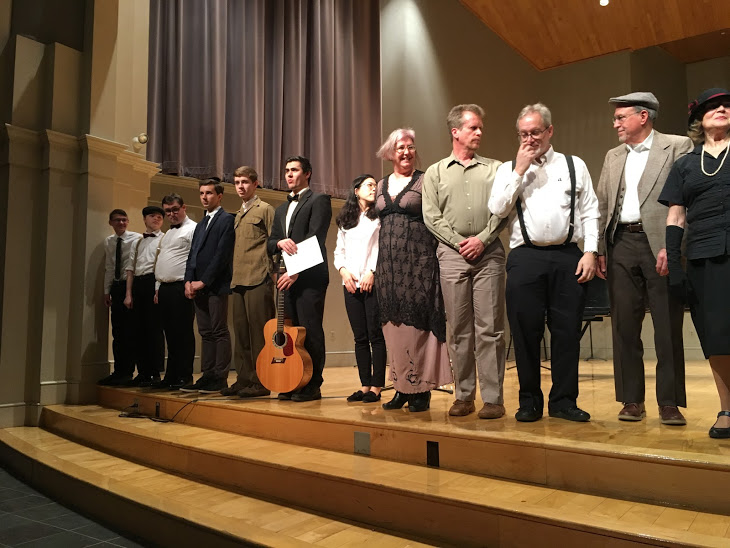
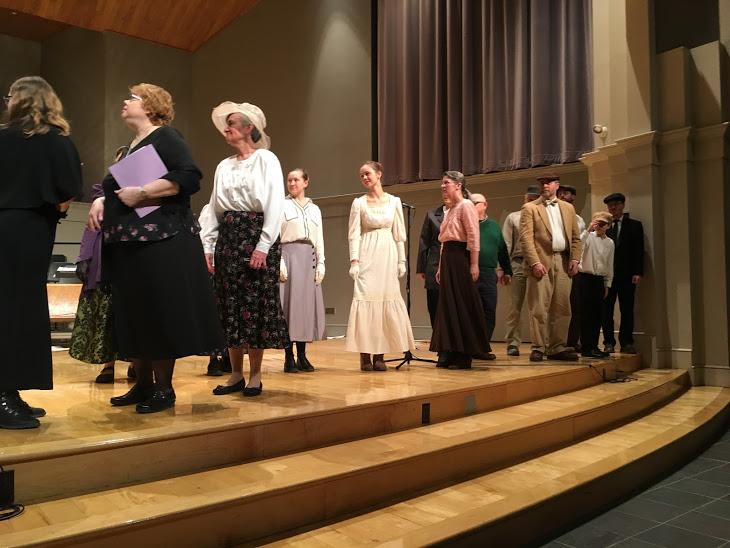
Prelude: “I Never Knew His Name,” from the musical The Civil War
(Ghost of the Civil War)
[Total darkness, audio recording “Cenotaph” plays on house PA.starting at :47 fading it out at 2:14]
History
History repeats itself
History repeats itself
Remembrance Sunday
A war to end all war
And the war that came after that
To keep freedom’s flag flying
Lest we forget, the glorious dead
Scene 1: Marching
[Stage lights come up to dim as Daeun is playing Ragtime]

Narrator: It is the beginning of the twentieth century, a rich time in the history of many social movements, church movements, movement of people- Optimism holds sway. As war fever rose in Europe, there was a healthy anti-war sentiment “over here.”
[Mother and Father come from choir to share microphone 1 as Narrator is talking. Workers, Feminists, and Soldiers also come from choir and sit in groups across stage, making signs.]
“I Didn’t Raise My Boy to Be a Soldier” (Mother, Father, acc. Daeun, piano)

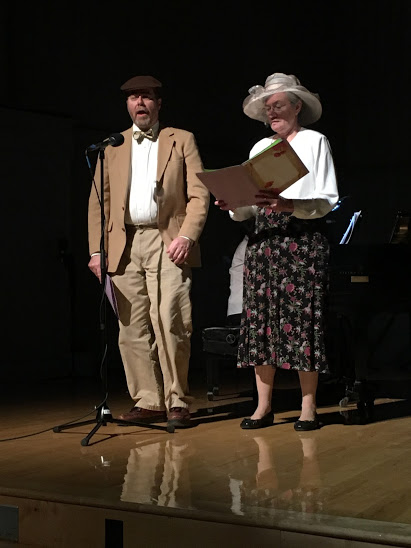
[Father] Ten million soldiers to the war have gone,
Who may never return again.
Ten million mothers’ hearts must break
For the ones who died in vain.
Head bowed down in sorrow
In her lonely years,
I heard a mother murmur thru’ her tears:
I didn’t raise my boy to be a soldier,
I brought him up to be my pride and joy.
Who dares to place a musket on his shoulder?
To shoot some other mother’s darling boy?
Let nations arbitrate their future troubles,
It’s time to lay the sword and gun away.
There’d be no war today,
If mothers all would say,
“I didn’t raise my boy to be a soldier.”
[Mother] What victory can cheer a mother’s heart,
When she looks at her blighted home?
What victory can bring her back
All she cared to call her own?
Let each mother answer
In the years to be,
Remember that my boy belongs to me!
[chorus, with Feminists joining on the last line in 3 parts]

Narrator: Woodrow Wilson’s campaign slogan was “He kept us out of war,” the church was writing and singing peace hymns. Prohibition, Votes for Women, Unions, Socialism were on the rise, putting up their placards. African Americans were forging the Great Migration, filling new industrial jobs in the North, and actively confronting prejudice to create a black urban culture that would exert enormous influence in the decades to come.
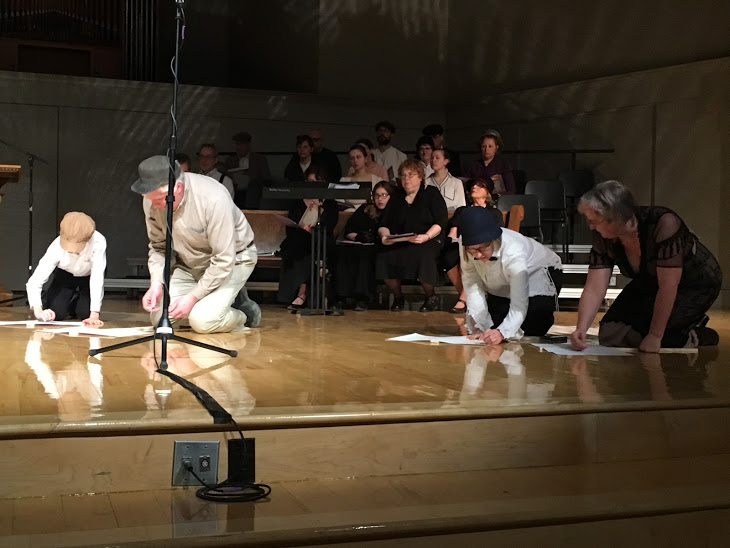
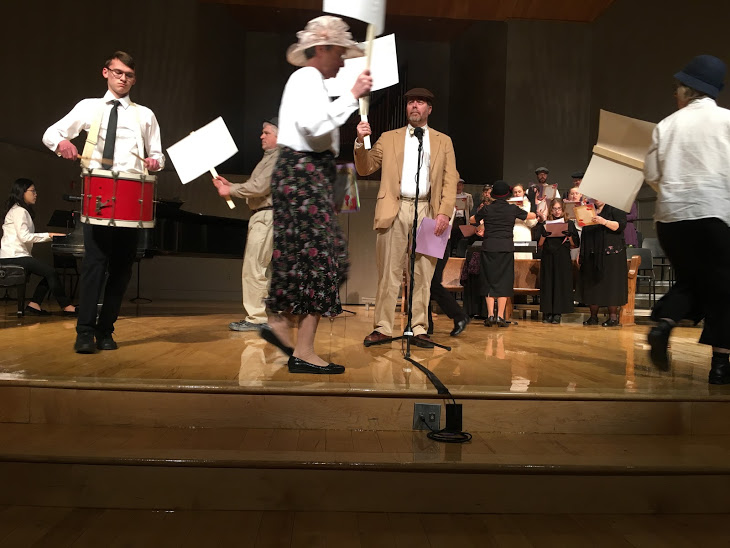
[Each group moves to a microphone: 1. Feminists, 2. Workers, 3. Gospel Singer, 4. Soldiers. They form a loose vignette with their signs. Spotlight moves to the first three groups in turn as they freeze like a photograph and perform their song.]
“Bread and Roses” (Fenimists, a capella)

As we go marching marching in the beauty of the day
A million darkened kitchens a thousand mill lots gray
Are touched with all the radiance that a sudden sun discloses
For the people hear us singing, bread and roses bread and roses
“Solidarity Forever” (Workers, acc. Daeun, piano)
When the union’s inspiration through the worker’s blood shall run
There can be no power greater anywhere beneath the sun
Yet was force on Earth is weaker than the feeble strength of one
But the Union makes us strong
Solidarity Forever… For the Union makes us strong!
“Marching to Zion” (Gospel Singer)
“We’ve a Story to Tell to the Nations” (Choir, acc. Daeun, piano)

1. We’ve a story to tell to the nations, that shall turn their hearts to the right,
a story of truth and mercy, a story of peace and light.
Refrain: For the darkness shall turn to dawning, and the dawning to noonday bright,
and Christ’s great kingdom shall come on earth, the kingdom of love and light.
2. We’ve a song to be sung to the nations, that shall lift their hearts to the Lord,
a song that shall conquer evil and shatter the spear and sword. [refrain]
[As verse 3 begins, Drummer appears on stage playing a marching cadence, and groups start marching in a circle with picket signs, leaving one member at the microphone.]
3. We’ve a message to give to the nations, that the Lord who reigneth above
has sent us His Son to save us, and show us that God is love. [refrain]
[As refrain 3 begins, people at mics join in with their songs layered on top.]
[Choir resumes with verse 4, with Soldier singing on top.]
4. We’ve a Savior to show to the nations,
who the path of sorrow has trod,
that all of the world’s great peoples
may come to the truth of God.
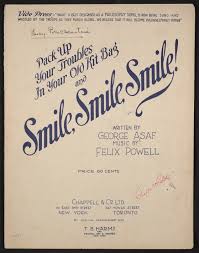
Pack up your troubles (Soldier)
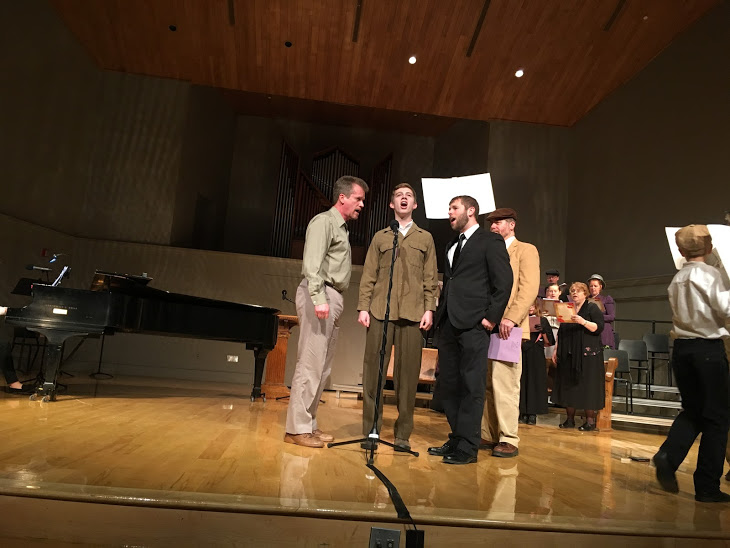
Pack up your troubles in your old kit-bag,
And smile, smile, smile,
While you’ve a lucifer to light your fag,
Smile, boys, that’s the style.
[All groups sing refrain, with Soldier layering the rest of their song on top.]
Refrain: For the darkness shall turn to dawning,
and the dawning to noonday bright,
and Christ’s great kingdom shall come on earth,
the kingdom of love and light.
What’s the use of worrying?
It never was worthwhile, so
Pack up your troubles in your old kit-bag,
And smile, smile, smile
[In last bar of songs, brass has appeared on stage and suddenly blasts unpleasantly the first three notes of “Over There.” All lights out.]
Scene 2: The War Begins
[In the dark, “Danny Boy”melody begins on piano. Narrator speaks during it.]
Narrator: In April of 1917 President Wilson heard the ‘pipes of war and could no longer ignore the pleas of allies in Europe. Congressman Isaac Sherwood from Toledo testified in the debate, saying “my service in the Civil War has saddened me all of my life,” and voted no, along with numerous others. But war did come, and as the boys and men were starting off overseas, the Sedition Act of 1918 made sure any voices against the war were abruptly silenced.
[“Danny Boy” continues on piano. Lights go up. A few choir members hum along to “Danny Boy”, while the others sing the next hymn a ‘capella, using a round to repeat the first verse at the end]
O God of Love, O King of Peace (Choir)

1. O God of love, O King of peace, Make wars throughout the world to cease;
The wrath of sinful man restrain: Give peace, O God, give peace again!
2 Remember, Lord, Thy works of old, The wonders that our fathers told;
Remember not our sins’ dark stain: Give peace, O God, give peace again!
3 Whom shall we trust but Thee, O Lord? Where rest but on Thy faithful word?
None ever called on Thee in vain: Give peace, O God, give peace again!
[repeat verse 1 as a round, ending a capella]
Narrator: Things went from bad to worse. Even the Devil wanted to stay away from the hell war was waging on earth.
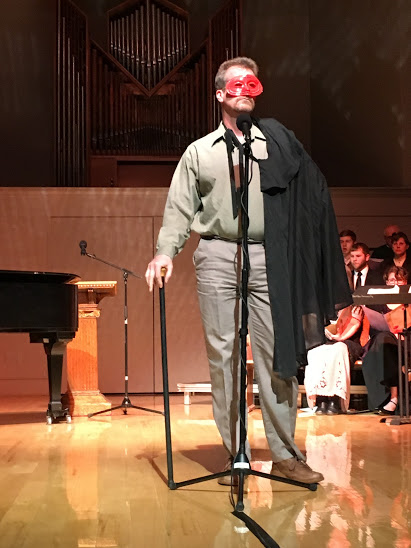
“Stay Down Here Where You Belong” (Devil, acc. Daeun, piano)
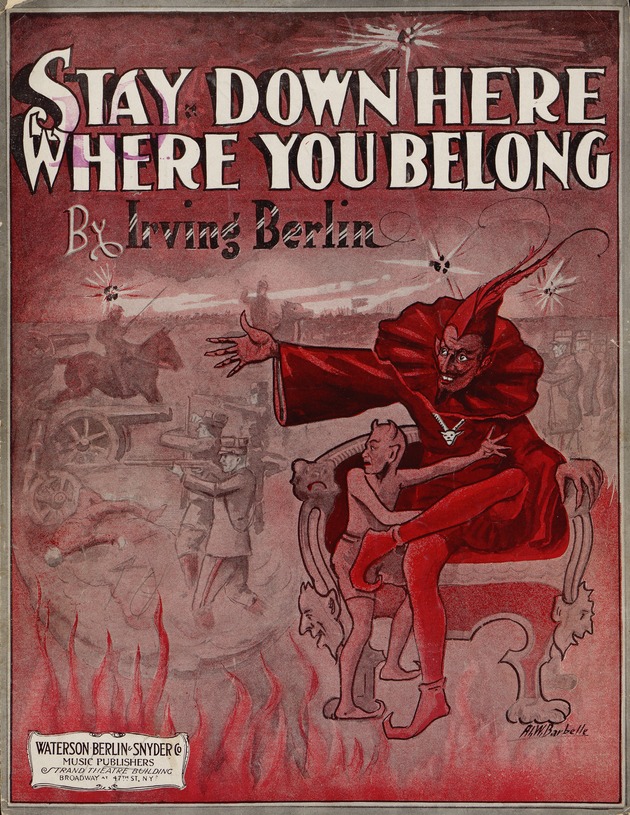
1. Down below, down below sat the devil talking to his son
Who wanted to go up above, up above
He cried, “It’s getting too warm for me down here and so
I’m going up on Earth where I can have a little fun
The Devil simply shook his head and answered his son
Refrain: Stay down here where you belong
The folks who live above you don’t know right from wrong
To please their kings they’ve all gone out to war
And not a one of them knows what he’s fighting for
‘Way up above they say that I’m a Devil and I’m bad
Kings up there are bigger devils than your dad
They’re breaking the hearts of mothers, making butchers out of brothers
You’ll find more hell up there than there is down below
2. “Kings up there, they don’t care for the mothers who must stay at home
Their sorrows to bear. Stay at home, don’t you roam
Although it’s warm down below, you’ll find it’s warmer up there
If e’er you went up there, my son, I know you’d be surprised
You’d find a lot of people are not civilized.”
Scene 3: CO’s
Narrator: Fighting for respect, Black men were quick to sign up as soldiers, and one week after Wilson’s declaration of war, all the quotas for African Americans had been filled. Americans couldn’t tolerate Black men in positions of power or heroism, but they were quite comfortable being entertained by them. Several famous Black Army Bands went on tour at home and abroad, one led by Ragtime pianist Willie-the-Lion Smith, and one led by Jim Europe. The music of these bands gave birth to jazz. As news of the war became more grim, anti-war songs stopped hitting the airwaves altogether; the pop music scene got downright cheerful.

“Simple Melody” (brass instrumental, acc. Daeun, piano)
Narrator: What happens when you have no hope of making any difference on public opinion? Your only hope is to dissent with your body. Amish-Mennonite conscientious objector Emanuel Swartzendruber received his call to report for military service on March 4, 1918. This is his story in his own words:
“The sergeant ordered me to put on a uniform. At the same time, another young man appeared on the scene without a uniform. I made no effort to put mine on. But between kicks and cuffs I received, I could see that he didn’t put his on either. Finally, the soldiers forced part of the uniforms on us. “Get your breakfast. We’ll have some fun later,” the sergeant told us.
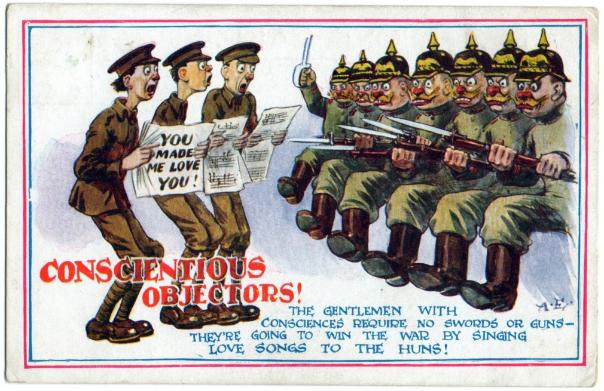
By the time breakfast was over there were four COs. We were taken outside and asked to tear down an outhouse. The first thing I knew, someone grabbed me by the seat of my pants. My head struck the roof of the building. I don’t know what happened—boards were flying everywhere. After the building was removed, the sergeant said, “Now we’ll show you what your Jesus can do when you are in our hands.”
So he threw one of the boys into the cesspool. He stood in the filth nearly up to his armpits. They took a shovel and shoveled excrement on his head saying, “I baptize you in the name of Jesus.” One of them, looking upwards said, “Can you see Jesus?” The sergeant told us, “If he is your brother, pull him out.” We pulled him out, took him to the bathhouse and cleaned him.
The sergeant threw soap at me and pushed me into a corner, choking me. He said, “Come with me.” I followed him to the cesspool. He asked me three times if I was ready to accept military service. I answered only once, “No.” He took me by my legs and put me into the cesspool head first. I heard the soldiers yelling, “Don’t put him in any further, you’ll kill him!” The sergeant pulled me out, not saying a word. He stood shaking his head while I lay on the ground. Finally he said, “Go and wash.”
We were taken before a group of higher officers, and asked who we were and what denomination we belonged to. The spokesman told the sergeant, “Put these men on bread and water.”
We went to our stalls. As I sat on my bunk, the sergeant came to us and asked, “Do you still love me?” I said, “Yes, I do.” He walked away from me.
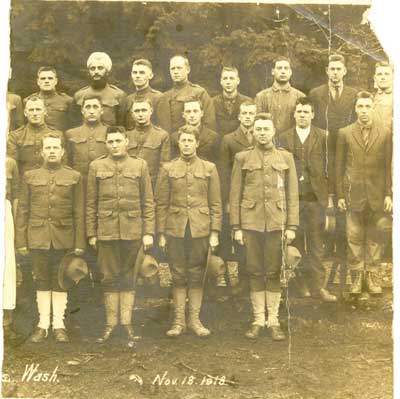
After the military saw that we had not changed our minds while in the guard house, they told us that we would be court-martialed. They ordered a general court-martial to be held at Camp Forrest on June 11, 1918. Eight Cos were court-martialed and sentenced to prison at Fort Leavenworth, Kansas, for ten years of hard labor, forfeiting all payments and allowances.
[Brass begins a reprise of “Simple Melody” with piano accompaniment, while they stagger around like they’re drunk on war. “Major General” begins simultaneously.]
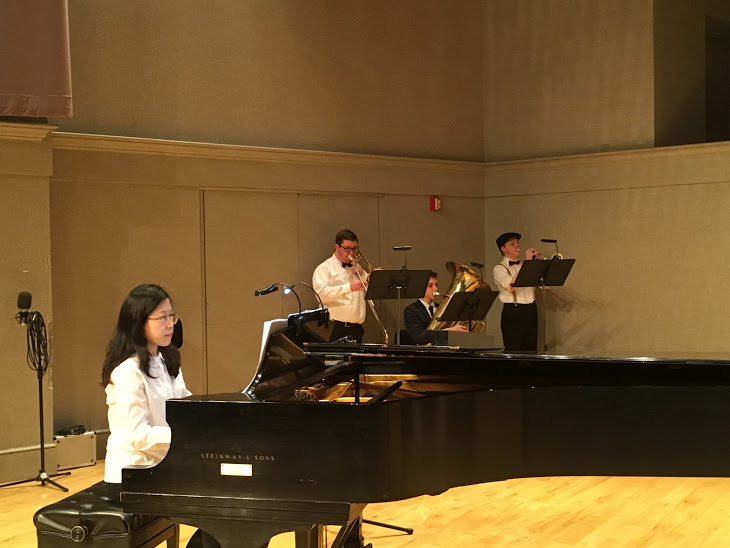
“Major General” (Major General, acc. brass and piano playing “Simple Melody”)
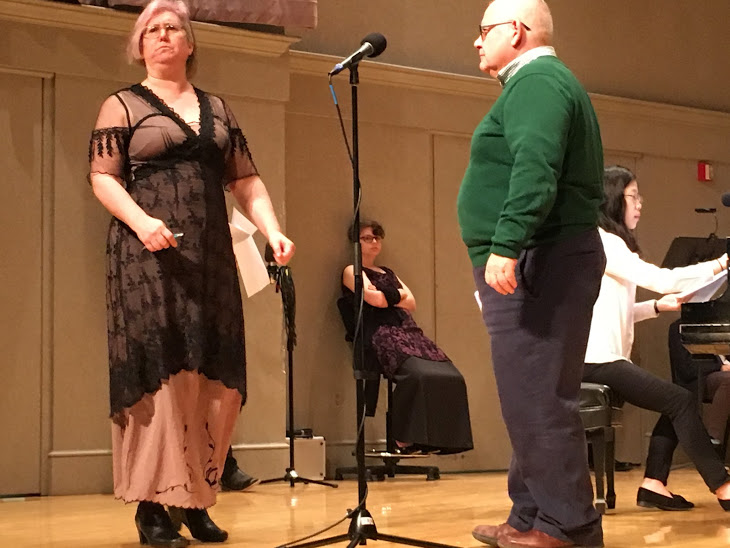
I am the very model of a modern Major-General,
I’ve information vegetable, animal, and mineral,
I know the kings of England, and I quote the fights historical
From Marathon to Waterloo, in order categorical;
I’m very well acquainted, too, with matters mathematical,
I understand equations, both the simple and quadratical,
About binomial theorem I’m teeming with a lot o’ news,
With many cheerful facts about the square of the hypotenuse.
Scene 4: The Split
“What’ll I Do?” (Young Man)
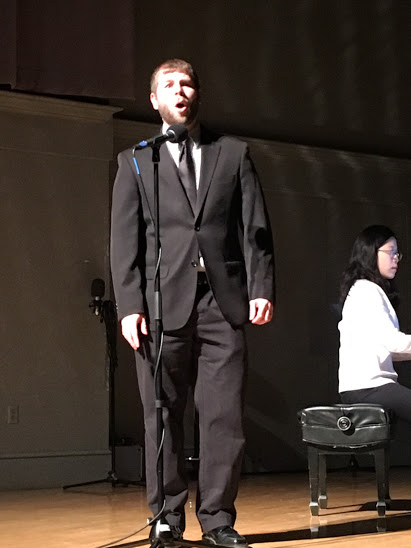
What’ll I do when you are far away and I’m so blue? What’ll I do?
What’ll I do when I am wondering who is kissing you? What’ll I do?
What’ll I do with just a photograph to tell my troubles to?
When I’m alone with only dreams of you that won’t come true, what’ll I do?
He always looks the same
Dressed in blue or gray
All the life he’ll miss
Girls he’ll never kiss
Things he’ll never try
Unaware that I
Never knew his name
“I Ain’t Got Nobody” (Gospel Singer)
Now I ain’t got nobody, and nobody cares for me!
That’s why I’m sad and lonely,
Won’t somebody come and take a chance with me?
“In Christ There is No East or West” (Choir)
1. In Christ there is no east or west, in him no south or north,
but one great fellowship of love throughout the whole wide earth.
[Young man sings What’ll I do, during Vs 2,3]
2. In Christ shall true hearts everywhere their high communion find;
his service is the golden cord close-binding humankind.
3. Join hands, disciples of the faith, whate’er your race may be.
All children of the living God are surely kin to me.
4. In Christ now meet both east and west; in him meet south and north.
All Christly souls are one in him throughout the whole wide earth.
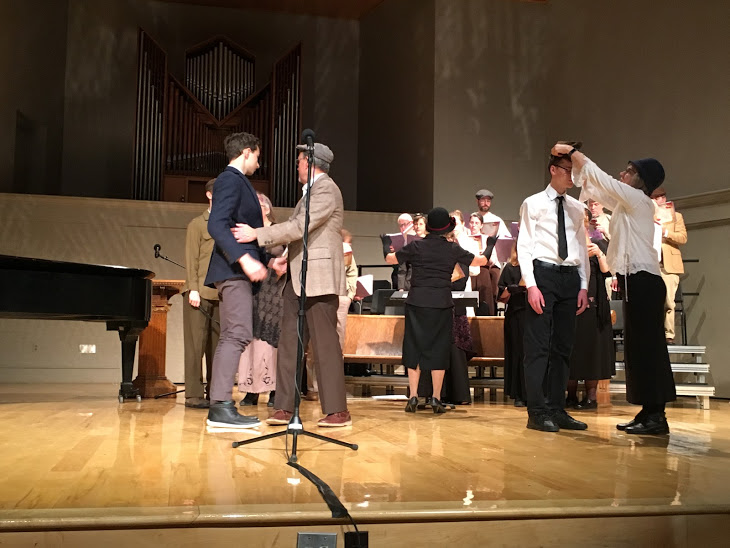
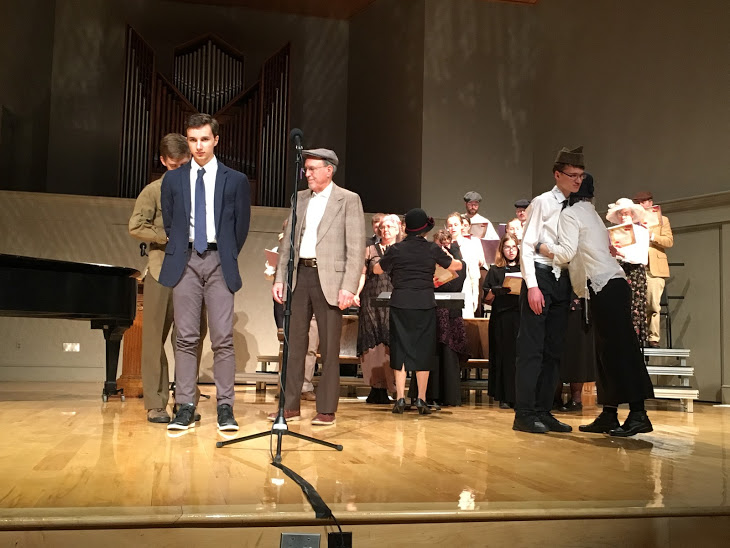
[During the last verses, Man and Woman and two Young Men face each other. One parent puts a uniform (jacket or hat or both) on one young man, and the other parents ties their young man’s hands behind his back. Both parent/child sets slowly turn and the young men walk away. The parents, turning back in sadness for one last glance at each other before parting ways.]

Scene 5: Black and White
Narrator: Over 20 thousand Americans had applied to be Conscientious Objectors for various reasons. Four thousand were accepted into the CO camps. Of those, about 500 young men refused to cooperate in any way with the military. These men were imprisoned and subjected to such harsh treatment several died. In 1918 a Mennonite at Camp Lee in Virginia wrote: “We were cursed, beaten, kicked, and compelled to go through exercises to the extent that a few were unconscious for some minutes. One of the boys was scrubbed with a scrubbing brush using lye on him. They drew blood in several places.”
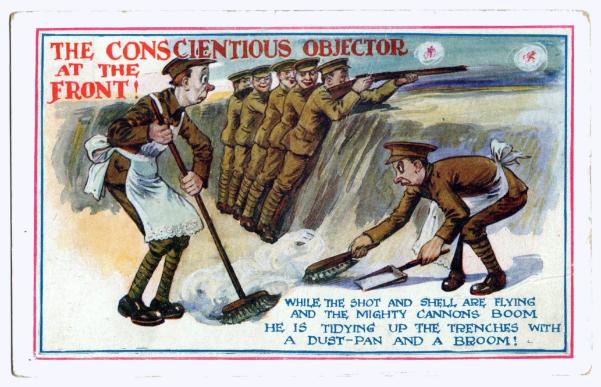
The men tell their stories of war time, of being isolated, ostracized, pranked, tarred and feathered, assigned to hard labor… and then a story is told by John Detweiler, who reported that two African American men were hung at Camp Dodge, and all the Conscientious Objectors in camp were required to watch. Ura Hostetler was at Camp Dodge that day, and said he was forced to witness the hanging of three African Americans. J.D. Menninger testifies that he witnessed the hanging of 3 Black men at Camp Dodge on July 5, 1918.
Another horrific chapter of US history was in full swing: the lynching of African American men. Over four thousand people died from this barbarous practice between 1877 and 1950, and in the Great War Era, Black veterans who had chosen to wear the uniform were the people most at risk of experiencing targeted racial terror. As COs were scorned for refusing to wear the uniform, Black men were being murdered for daring to wear it.
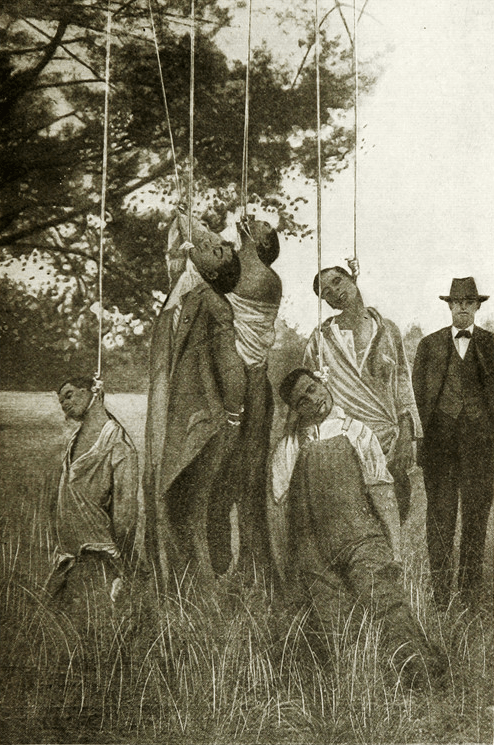
[Gospel Singer begins humming as Narrator continues]
Here is the story of one of those men:
On a December morning in 1918, Charles Lewis began his last day as a private in the United States Army. Just a month after the end of World War I, Lewis accepted his honorable discharge and left Camp Sherman, in Chillicothe, Ohio, one of the few military facilities that housed black soldiers. He was headed home to Alabama.
While Lewis was waiting for the southbound train to leave Fulton, the local deputy sheriff boarded the train car, looking for suspects in a robbery. He approached Lewis, demanding to inspect his baggage. The young soldier, still in uniform, declared that he had just been honorably discharged and had never committed a crime in his life. Lewis even provided documents from his commanding officers at Camp Sherman attesting to his excellent service record. An argument broke out between the two and Lewis was charged with assault and resisting arrest. As Lewis was taken to the county jail in Hickman, Kentucky, news of the altercation spread. A mob of as many as 100 men gathered outside the jail. At midnight, masked men stormed the station, smashed the locks with a sledgehammer, pulled Lewis from his cell, and hanged him. His body, still in uniform, was left for all to see.
“We’ll Understand It All By and By” (Gospel Singer)
Scene 5: Martyrs
[Folk Singer walks to mic 2, moved mic 1 to use at piano]

“Ballad of the Hutterite Martyrs” (Folk singer, acc. Wendy Chappell-Dick, piano)
1. Conscientious Objectors, you think you’re so pure
My four Christian brothers, what makes you so sure?
Of the gospel of peace, love without fear
That your church has been teaching for 400 years
With orders for harsh treatment from the army corps
You slept without blankets on a wet cement floor
And though you refused to give in and conform
Folded neatly beside you was a warm uniform.
CHORUS
I know you dressed oddly, and I know you were Godly
Farming the land, sharing all that you had
I know you endured spite and torture
For refusing the clothes of a soldier
2. Hanging from chains, feet barely touching the floor
Solitary confinement, too much to endure
When the war was over, and nothing been gained
The men left the prison still wearing their chains
Carrying Bibles and satchels they were led by a man
To solitary confinement, for those who could still stand
Two brothers had fallen, so sick and so ill
The suffering gospel was theirs to fulfil
CHORUS
3. Death can be mercy, or death can be cruel
It can let you escape a prison cesspool
But though you endured the world’s fire and storm
They sent you home in your coffin in a new uniform
Although you sought neither to harm or oppress
When we tell your story we still can’t assess
If you should be called foolish, obedient, or brave
But now the word martyr is carved into your grave.
CHORUS
4 I ask you my brothers, I can’t help wonder why
Do those who died fighting do they know why they died?
Did they really believe when they answered the call
did they really believe that this war would end wars?
Forever this song of suffering and shame
the killing the dying was all done in vain
I tell you my brothers it’s all happened again,
and again, and again, and again and again
Narrator: More than 10 million soldiers died in World War I, along with 7 million civilians. Most died in trenches, machine gun fire, panic, terror, mutilated bodies ground into mud.
The peace movement had failed. The church had no apparent unity of purpose or prophetic voice. In the end the conscientious objectors could claim no victory, no glory, nothing but a vindication that this was a useless wasteful unjust war.
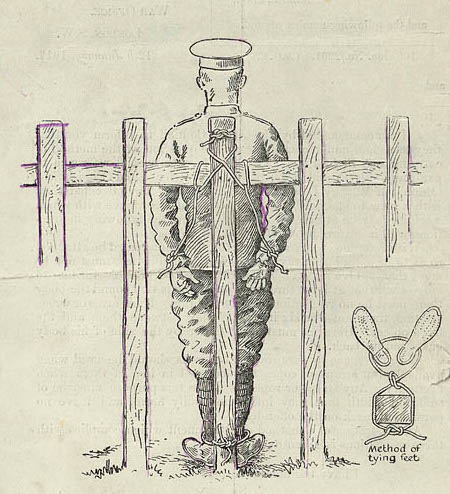
Yet, we learned. The lessons of WWI helped put in place a much more structured and accessible system for the next generation of conscientious objectors in WWII. Instead of languishing in prison camps, Civilian Public Service was born, which allowed service alternatives to military service. They fought forest fires, worked in mental institutions, planted trees, did dairy testing and served as subjects for medical experiments in camps scattered throughout the United States.
The Conscientious Objectors of WWI who kept diaries or wrote memoirs invariably reported that the suffering they had endured because of their conscience strengthened their faith.
Swartzentruber’s story continued when he runs into his sergeant at a later date. The sergeant said, “When you were first put in the guard house, I thought you were nothing but war dodgers. Since watching you day by day, I have changed my mind. I used to be a Sunday School boy, but could it be possible that you are right and all the rest of us are wrong about war?”
Through the CO’s experience in WWI, we learned about human dignity in the face of hatred and oppression. The power of nonviolence.
African Americans would use the power of nonviolent resistance to lead the country in the civil rights movement which put an end to lynching, and which continues in the non-violent social change movements of today such as Black Lives Matter.
[Carolyn walks to the front of the stage to direct the audience Brass players come stand near the piano to play along, lights in the audience go up]
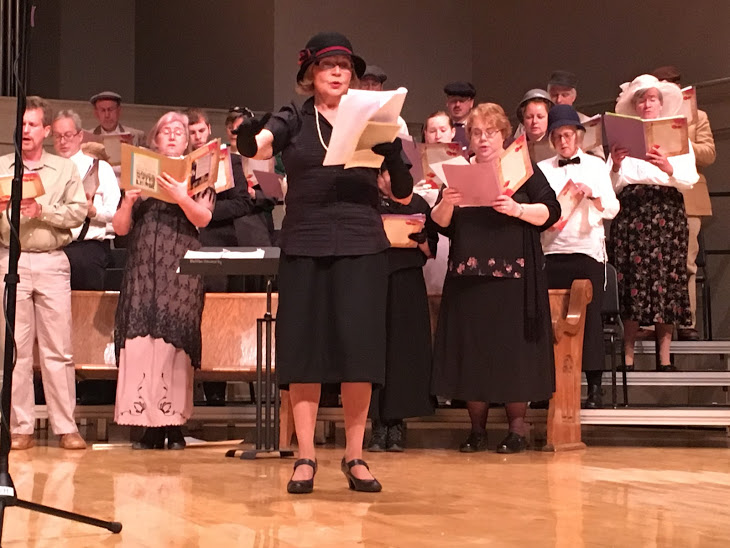
“Let there be light, Lord God of Hosts” (choir, audience and brass, acc. Daeun, piano)
1. Let there be light, Lord God of hosts,
Let there be wisdom on the earth;
Let broad humanity have birth,
Let there be deeds, instead of boasts.
2. Within our passioned hearts instill
The calm that endeth strain and strife;
Make us thy ministers of life;
Purge us from lusts that curse and kill.
3. Give us the peace of vision clear
To see our brothers’ good our own,
To joy and suffer not alone,
The love that casteth out all fear.
4. Let woe and waste of warfare cease,
That useful labor yet may build
Its homes with love and laughter filled;
God give thy wayward children peace.
Scene 6: Conclusion
[Medley, acc. Lucas, piano]
“Hello Central give me No Man’s Land” (Young Boy, accompanied by Lucas on piano)
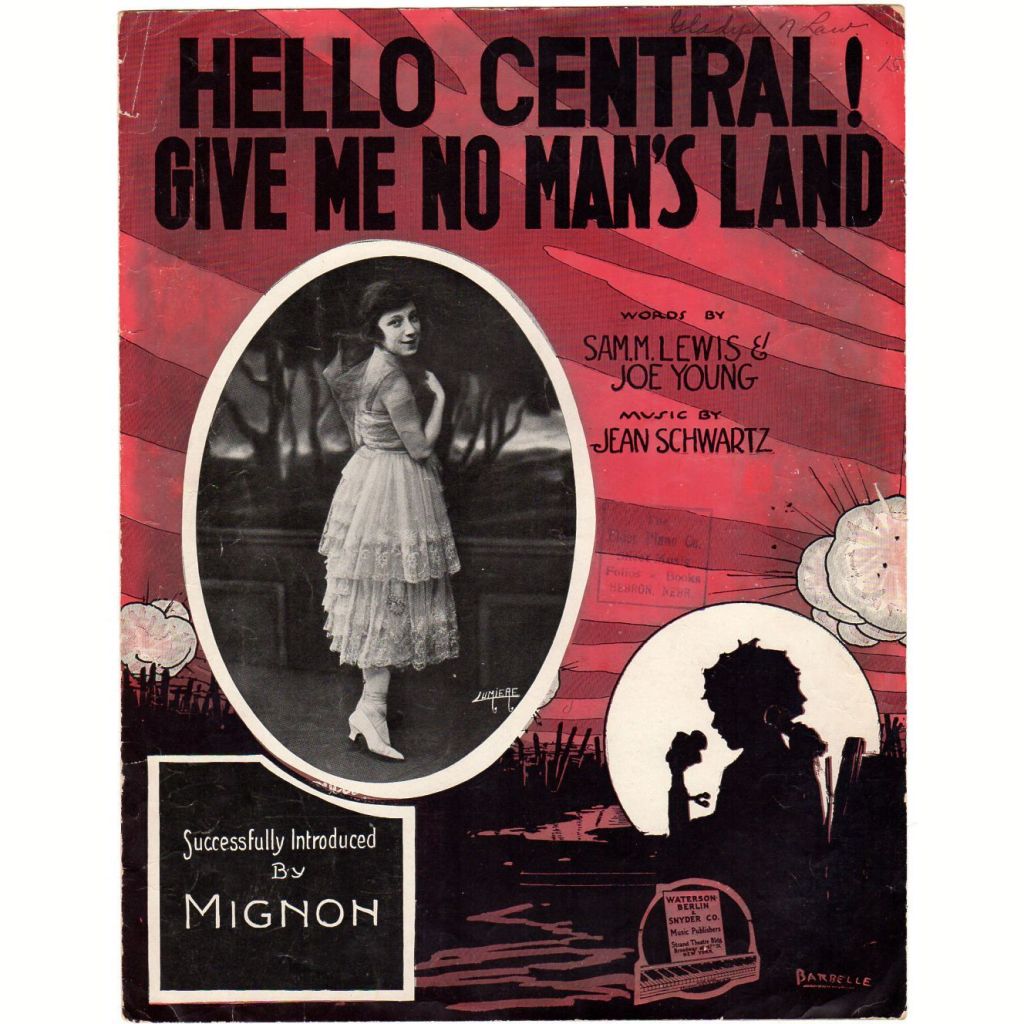
Hello, Central! Give me No Man’s Land,
My daddy’s there, my mamma told me;
She tip-toed off to bed
After my prayers were said;
Don’t ring when you get the number,
Or you’ll disturb mamma’s slumber.
I’m afraid to stand here at the ‘phone
‘Cause I’m alone.
So won’t you hurry;
I want to know why mamma starts to weep
When I say, ‘Now I lay me down to sleep’;
Hello, Central! Give me No Man’s Land.

“Christmas in the Trenches” (Francis Tolliver)
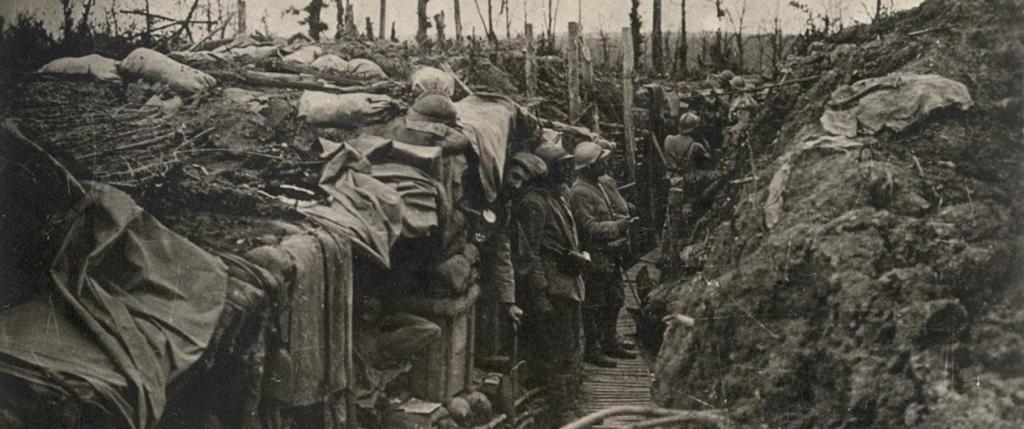
1. My name is Francis Tolliver. I come from Liverpool
Two years ago the war was waiting for me after school
To Belgium and to Flanders, to Germany to here
I fought for King and country I love dear
It was Christmas in the trenches where the frost so bitter hung
The frozen field of France were still, no Christmas song was sung
Our families back in England were toasting us that day
Their brave and glorious lads so far away
2. I was lyin’ with my mess-mates on the cold and rocky ground
When across the lines of battle came a most peculiar sound
Says I “Now listen up me boys”, each soldier strained to hear
As one young German voice sang out so clear
“He’s singin’ bloody well you know”, my partner says to me
Soon one by one each German voice joined in in harmony
The cannons rested silent. The gas cloud rolled no more
As Christmas brought us respite from the war
3. As soon as they were finished a reverent pause was spent
‘God rest ye merry, gentlemen’ struck up some lads from Kent
The next they sang was ‘Stille Nacht”. “Tis ‘Silent Night'” says I
And in two tongues one song filled up that sky
“There’s someone comin’ towards us” the front-line sentry cried
All sights were fixed on one lone figure trudging from their side
His truce flag, like a Christmas star, shone on that plain so bright
As he bravely strode, unarmed, into the night
4. Then one by one on either side walked into no-mans-land
With neither gun nor bayonet we met there hand to hand
We shared some secret brandy and wished each other well
And in a flare-lit soccer game we gave ’em hell
We traded chocolates, cigarettes and photographs from home
These sons and fathers far away from families of their own
Young Sanders played his squeeze box and they had a violin
This curious and unlikely band of men
5. Soon daylight stole upon us and France was France once more
With sad farewells we each began to settle back to war
But the question haunted every heart that lived that wonderous night
“whose family have I fixed within my sights?”
It was Christmas in the trenches where the frost so bitter hung
The frozen fields of France were warmed as songs of peace were sung
For the walls they’d kept between us to exact the work of war
Had been crumbled and were gone for ever more
6. My name is Francis Tolliver. In Liverpool I dwell
Each Christmas come since World War One I’ve learned its lessons well
That the ones who call the shots won’t be among the dead and lame
And on each end of the rifle we’re the same
“Root Beer Rag”
[As Lucas plays the Scott Joplin song, the lights fade out to darkness, opposite of what they did at the beginning]
Postlude
[The Company comes forward and takes a bow as we play a recording of Nora Baynes singing “The Greatest Battle Song of All”]
“The Greatest Battle Song of All”

1. It seems to me this life is full of petty strife and care.
While battle songs of nations are floating on the air,
We’re patriotic always when battle hyms [sic] are sung
And hearts beat all the faster when in the mother tongue.
It takes a martial air to make men do and dare.
Chorus: There’s a battle song called ‘Tipperary’ and ‘God Save the King’ While ‘My Country Tis of Thee’ is what Yankees sing.
The Motherland the Fatherland to arms their sons now call,
But here comes the bride, here comes the bride, that’s the greatest battle song of all.
2. We’ve heard in song and story of the men who fought in wars,
And there on hist’ry’s pages we eas’ly find the cause,
With noble aspiration so loyal, brave and free.
A man will fight for freedom as well as liberty.
They say a wedding tune will send men to their doom.

*The hymns in this program were selected from the “nonresistance” or “peace” sections of Mennonite hymnals published in the era of the Great War.
Narrator: Gerald Mast
Ghost of the Civil War: Meghan Gibson
Frances Tolliver: Lucas Harnish
Mother: Sara Brenner
Father: Daniel Berger
Soldiers: Seth Andreas, Brian Timpe
Trumpet: Patrick Estell
Tuba: Jacob Mast
Trombone: Josh McCauley
Drummer: Carter Dyar
Socialist Workers: Theo Andreas, Andy Chappell-Dick, Daniel Berger
Feminists: Wendy Chappell-Dick, Sara Brenner, Jan Wiebe
Gospel Singer: Crystal Sellers Battle
Devil: Darryl Nester
Young Man: Brian Timpe
Major General: Tig Intagliata
Folk Singer: Jan Wiebe
Boy: Theo Andreas
Director: Carolyn McDaniel
Accompanist: Daeun Choi
Stage Manager: Merv Schrock
Costumes: Sara Brenner
Mennonite Choir: Mona Lou Reichenbach, Monica Harnish, Liana Gott, Lisa Robeson, Benji Bergstrand, Gretchen Bergstrand, Melinda Estell, Rebecca Estell, Victoria Woods-Yee, Steve Harnish, Mitch Kingsley
Love Notes
From first rehearsal to performance, “Songs of Conscience and Peace” was a work in progress with a triumphant finish. Speaking to members of the audience, people were deeply moved by this musical theater production. The scenes caught the various historical happenings of this era in a concise way, and Wendy’s script exhibited her thorough, conscientious study . The staging was well-thought out and flowed smoothly. I especially enjoyed Wendy’s creativity using two songs simultaneously. Wendy’s writing and directing showed her her intellect, experience, and ability to work with people. Her calm personality was a great help to the performers.
Carolyn McDaniel
With each of these projects Wendy brought together something amazing through her extensive research, her respect for the talents of others and her sensitivity to both the music and the concepts. So many of us are so very grateful to Wendy for these wholehearted efforts!
Judith Greavu
Songs of Conscience and Peace: Music of the Great War Era was unbelievably moving. Wendy told the story of these young men and families in a way that left me both distraught by the inhumane treatment of conscientious objectors and in awe of the bravery of the men and women whose lives she unfolded before us.
Pat Sheidler
Thank you for the superb program on World War I songs you led the planning for. It was just excellent. Good message. Good voices. The signs that Andy and colleagues marched with were historically accurate, too. Such protest did indeed happen until the government shut protest down. This presentation should be more widely seen! How?
Ron Lora
 Mennofolk Music