Christmas is a time of contrasts. We sing of trees, yet cut them down. We hear legends of thorn bushes that mysteriously bloom in the winter. It is a time of longest nights and brightest candles. Explore the mysteries of Christmas with me through song, both ancient and modern. There will be songs about wassail, wise men, and all the holy trees of the season.


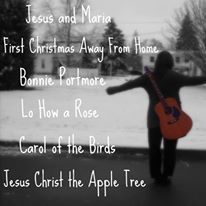
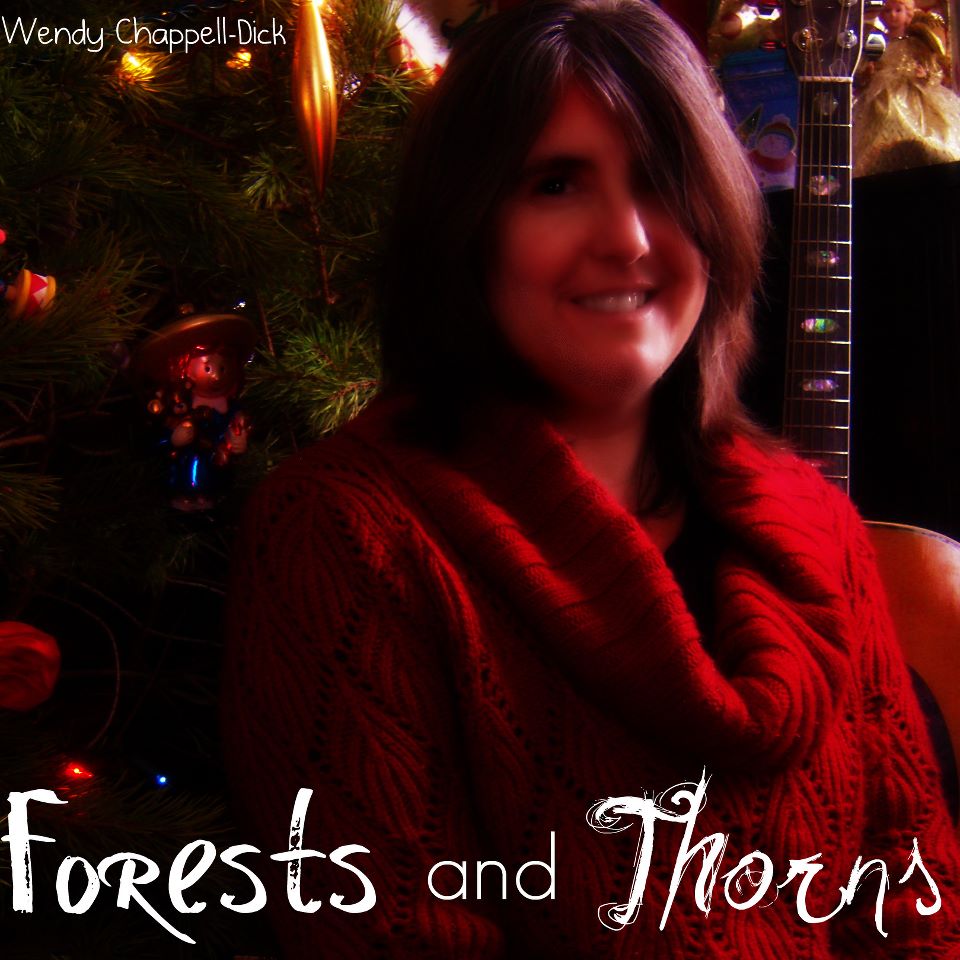
Songs of Forests and Thorns; The roots of Christmas
There are many themes that tie these songs together. In this set I have focused on trees. Specific trees are associated with Christmas, and many more trees have been identified as having special holy significance. See if you can pick out references to greenery, elderberry, apple, hawthorn, holly, and more.
Other themes to listen for are the Child of Wonder, the darkness of mid-winter, and human sacrifice. We don’t read it in the Bible, but there are references in these carols that tell us why this time and date were chosen for us to celebrate Christ’s birth.
Wexford Carol (“Carúl Loch Garman, Carúl Inis Córthaidh1,” Irish, 1100s)
One of the classic images of Christmas is the kid wearing a bathrobe and a towel on his head. A shepherd. Shepherds play a key role in our nativity, and strangely, shepherds are part of several pre-Christian stories where a “Child of Wonder” comes to earth.
Apollo, the Greek god of light, music and healing was born at the Solstice in a cave, to shepherds. Apollo wears a halo. He is depicted holding a lamb over his shoulder, and also depicted with a golden harp, another Christmas-sy image.
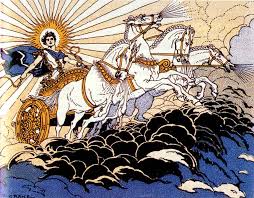
Mithras, an Iranian/Persian solar deity was born December 25, six centuries before Christ. His birth was attended by shepherds, and his life story had other similarities to Jesus. The emperor Constantine was one of his followers until he converted to Christianity, and it was Constantine who instructed citizens to celebrate the birth of Jesus on Dec 25 three hundred years AD.
Love Came Down at Christmas
Saturnalia, a festival held Dec 17-24th in Rome was a holiday that developed from much older traditions. Saturn was the god of agriculture, and during his festival, the grain bins were open to all. It was a time of riotous feasting. Schools and courts were closed, people gave gifts (taper candles and small dolls) and servants and masters exchanged power positions temporarily.
Basically, it was chaos. In the dark ages, Christmas was celebrated that way for centuries- a holiday so wild and drunken and out of control that it was eventually outlawed by Christians.
Gower Wassail
In medieval times Christmas was called the “Feast of Fools.” A mock king was chosen to rule with chaos rather than order, and at the end of the festival he was to be sacrificed for luck. A village would choose a child to be a “Boy Bishop” and take over the church. Christmas was described by a concerned clergyman to be a time of wild disports, disorderly laughter, illicit mirth and silly pranks.
The tradition of Wassailing continued that pattern, with unruly packs going door to door demanding hard apple cider in exchange for good luck.
Here we come a Wassailing
God Rest ye Merry Gentlemen (1500s or earlier)
Wassailers are similar to Mummers, which I find very confusing. Mummers are also called “Morris.” They might get their name from the Moors of Africa, and there may be other connections to an African named John Connu which made mumming significant amongst slaves in America. But even though we don’t know for sure, Mummers are definitely still carrying out forbidden pagan aspects of the “Feast of Fools,” doing dances about ritual slaying and rebirth of the new year. Elaborate Mummer parades still happen in Philadelphia, Baltimore and New Orleans.
The key to this tradition is freedom. During Christmas slaves got a temporary freedom as part of the chaos of the Feast of Fools where unthinkable power reversals were possible. In the American South, some plantations burned Yule logs, a piece of a fruit tree that was cut and burned, and as long as it burned slaves were free. Clever slaves thought of soaking the Yule log in water so it didn’t burn very well.
The next song was written by a member of the Rag Morris team, a modern adaptation of the pagan version of Christmas. Keep in mind that the coming sacrifice of Christ and his crown of thorns is also a part of our Christmas theology.
The Sans Carol (“Ma Gron war’n gelln,” Cornish) and The Lady Bore the Green Man
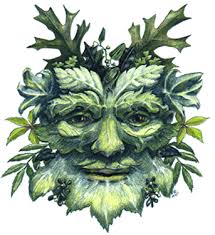
In stories about Wassailing, I read that sometimes villagers would choose the best apple tree in the orchard and name it the “Apple Tree Man” and water its roots with cider at Mid-Winter, even in America.
Christ is called “The Apple Tree.” And there is another mythical man who comes from a tree: “The Green Man.” The Green Man represents the natural world. He is worshipped, celebrated, and then killed in order for the harvest to grow.
One of the most interesting stories in human psyche is the legend of King Arthur. King Arthur’s Camelot is set during the tumultuous dark ages when Christianity was wiping out the Celtic pagan religions. King Arthur tales have lots of symbolism about that contrast, and the victory of Christianity. There is a stark story of the “Green Knight” who interrupts the Christmas festivities at Camelot and demands that one of the knights strike him with his own ax. Gawain cuts off his head, but the Green Man picks it up and puts it back on, a symbol of Celtic paganism refusing to disappear.

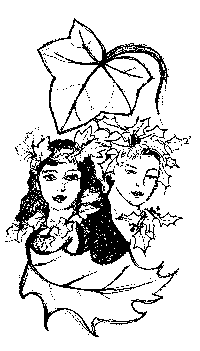
Fights are part of Christmas. And the biggest fight is the Holly against the Ivy. And as we know, holly wins! “O the holly and the ivy, when they are both full grown, of all the trees that are in the wood, the holly bears the crown” Holly imagery is warm, jolly, male and red-berried, and Ivy’s black berries represent cold, sad, dour female. Medieval art shows Holly and Ivy as a couple, and people would act out their fight and hold championships to see who would win- the darkness or the light.
Ritual slaying is part of the Mid-Winter tradition of the Green Man. King Herrod’s slaughter of the innocents gives us that aspect in the Biblical narrative. Weapons are traditionally fired at Christmas, trees are cut down, and in Scotland, they even burn their bannocks. Dionysus the god of excess was torn apart and devoured at Mid-winter. One of his followers, a young girl, was so full of passion that she fell down dead at his feet. To reward her, Dionysus put her spirit into a creeping plant and called her Ivy.
The Holly and the Ivy
Lo How a Rose (“Es Ist Ein’ Ros’ Entsprungen,” German 1500s)
Lo, how a Rose e’er blooming from tender stem hath sprung!
Of Jesse’s lineage coming, as men of old have sung.
It came, a floweret bright, amid the cold of winter,
When half spent was the night.
The rose that blooms in the winter from the stump of the tree…one of the most beautiful images of Christmas, and the contrast of darkness and light. There is a very odd story, based in natural history, of the Glastonbury holy thorn. Jesus’s uncle Joseph of Arimathea was a trader who is given credit for bringing early Christianity to Great Britain when he brought the Holy Grail there after the crucifixion. Apparently, he stuck his staff (which may have been made of the wood of the cross) in the earth and it grew into a tree that blooms exactly at Christmas. There is a real thorn tree, a Palestinian non-native species (in one account it is a hawthorn) at Glastonberry that really does bloom at Christmas. Each year the Queen gets a bloom on her Christmas breakfast tray. There are many amazing stories about this tree that have been witnessed and recorded.
Down in Yon Forest
Japanese Lullaby/Maria Wonders through the Thorn (“Maria durch ein Dornwald ging, carol,” German)
The oldest Child of Wonder that we know of who was born at Mid-Winter was the Egyptian Osiris, son of the primal gods Nut and Geb. He was killed by his brother, his body torn apart, and some of him was captured in a holy tree, which bloomed in amazing bizarre fruits once he was inside it. His lover Isis gathered up his body parts from across the world and brought him back to life, making his second birth December 25.
Isis is the most popular and wide-spread goddess in the world; she was worshipped in Africa, Europe and the Middle East. In art and effigies Isis is pictured as a dark skinned woman, holding her son on her lap, and both have halos. a pre-Christian Madonna and child. When Christianity overtook goddess worship, some of these beloved Isis images were simply changed to Mary and Jesus, as churches grew up around them. There is a wonderful network of mysterious “Black Madonnas” in southern Europe. I read in a travel guide book that people can’t remember why they are black (candle smoke?), but these special dark skinned Marys have miracles attributed to them, even in modern times.
The love between mother and child is central to Christmas

Bring a Torch Jeannette Isobella (“Un flambeau, Jeannette, Isabelle,” French 1500s)
Jesus is born and Mary’s calling.
Ah!* Ah! beautiful is the Mother!
Ah! Ah! beautiful is her child
One version of Isis which originated in Syria 204 BC is a seated goddess, found in a granary, named Cybele. She was called “Magna Mata” or Great Mother. Her son Attis could be one of the sources of our modern Christmas Tree. Without going into details, let’s just say that followers of Attis had a ritual where a pine tree would be decorated each year, and then cut down.
Trees decorated with fruit are not uncommon images in these Mid-winter stories. During Saturnalia Romans decorated trees and houses. Followers of an ancient woodland goddess cult cut twigs from a sacred grove of trees, gave them to each other, and carried them in a procession during Saturnalia. The earliest account of a Christmas tree as we know it was in Strausburg in 1650, when someone described the local habit of putting fir trees in their parlors and decorating them with taper candles, small dolls, and yes- apples. Specifically apples. And thus we come back to the Apple Tree Man, the apple tree of Christmas.
Jesus Christ the Apple Tree
With so many aspects of Christmas stolen and re-appropriated from other cultures and religions, I find it interesting to ponder how the nativity of Christ differs from this Feast of Fools. Power is turned on its head by Jesus. Not just for a week, but forever. The weak become the strong and the strong are brought to their knees. Jesus is the sacrifice, not every year for harvest, but for all time. His eventual death is meant to set humankind free from the need to kill anyone to appease gods or nature, even symbolically. No gifts are required other than the gift of our hearts. A Christian understanding of Jesus’s birth offers spiritual abundance rather than just an opening of the grain bins for material gluttony.
Carol of the Bells (“Shchedryk,” Ukraine)
Although “Carol of the Bells” has become a popular tune during the holidays, the original lyrics had nothing to do with Christmas. The song with a haunting four-note melody was originally a Ukranian folk song written as a “winter well-wishing song,” said Anthony Potoczniak, a Rice University anthropology graduate student who is studying the song’s history.
Written in 1916 by Ukrainian composer Mykola Leontovich and titled “Shchedryk,” the song tells the tale of a swallow flying into a household to proclaim the plentiful year that the family will have. The song’s title is derived from the Ukrainian word “shchedryj,” which means “bountiful.”
eurekalert.org, The Global Search for Science News
 Mennofolk Music